Hyundai seems determined to electrify every corner of its lineup – even its vans. Enter the Hyundai Staria EV, the zero-emissions version of Hyundai’s futuristic-looking people mover and cargo van that’s already turning heads globally. Here’s everything you need to know (well everything we’ve found out so far) about this electrified newcomer.
Hyundai first introduced the Staria in 2021 as a bold replacement for the iMax and iLoad (formerly the Starex). Available with petrol, diesel, and LPG options, it looked straight out of a sci-fi movie parked in the wrong timeline. Then, in early 2024, Hyundai teased us with a Staria Hybrid, which shared its tech with the Kia Carnival Hybrid. Apparently, that wasn’t futuristic enough, so Hyundai now aims to push the Staria fully electric by 2025.
According to South Korean industry sources, Hyundai will kick off preparations for an electric Staria at its Ulsan plant on January 25, 2025 . That gives us plenty of time to practice pronouncing “Staria EV” without sounding like we’re casting a spell. The electric drivetrain will likely borrow heavily from Hyundai’s existing electric models, including the ST-1, a commercial van cousin to the Staria EV already sold in Europe as the Iveco eMoovy. (Yes, it has a cooler name overseas.) Like the ST-1, the Staria EV is expected to feature a 76.1 kWh battery pack powering a single electric motor with 217 PS (that’s 160 kW from our neck of the woods).
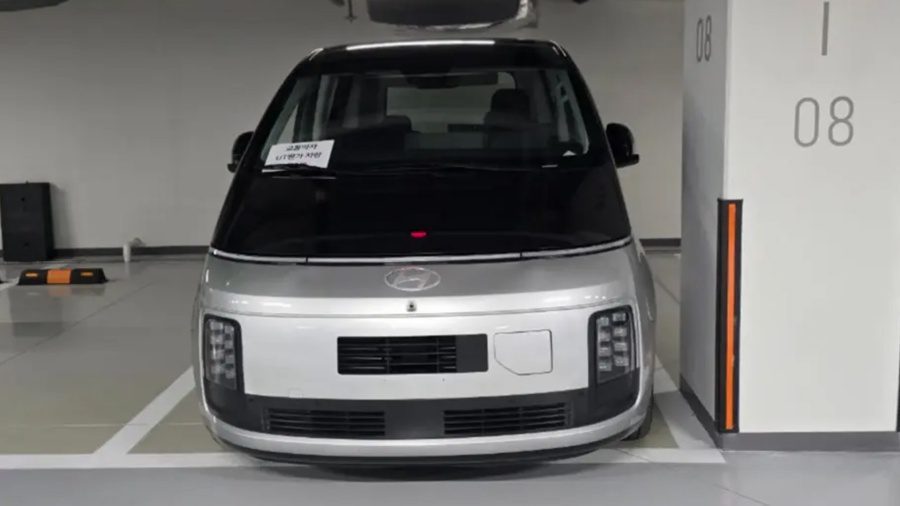
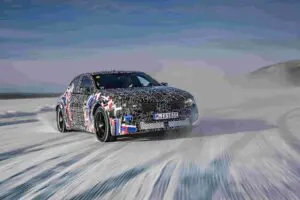
But wait, there’s more! The launch isn’t just about swapping an internal combustion engine for a battery. The Staria EV’s design stays true to its current spaceship-on-wheels aesthetic but gets subtle, EV-specific tweaks. Spotted testing in South Korea, a prototype lacked a grille (because electric cars don’t need to suck in air like their gas-guzzling cousins) and sported a driver-side charging port for easy plug-and-go functionality. It even had a windshield sign reading “Vehicle for Evaluation,” because subtlety is overrated.
If reports hold true, the Staria EV will debut with an 84 kWh battery, sourced from the Hyundai Ioniq 5, promising an impressive road presence and a more-than-decent range. Whether ferrying passengers or cargo, this all-electric ride promises a quieter and greener alternative as Hyundai continues to electrify its lineup.
So, what’s next for the Staria EV beyond speculation and spy shots? While its arrival in 2026 isn’t set in stone yet, one thing is clear: Hyundai’s electric ambitions are anything but idle. Whether you’re hauling goods or road-tripping with friends, the Staria EV invites you to leave behind not only emissions but also boring design.
Brace yourselves, electric vans are no longer just for delivery drivers. The Staria EV might just become the hippest zero-emissions shuttle in town. And honestly, who wouldn’t want to drive something that looks like it belongs in a space station parking lot?