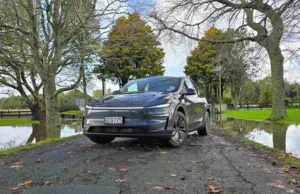
A Wellington owner has lost his High Court bid to overturn a tribunal ruling that let Tesla switch off DC fast charging on two repaired Model 3s, though the judge questioned the carmaker’s power to change cars after sale.
Once a car is sold, who has the final say over it: the owner, or the company that can still reach into its software? A New Zealand High Court judge has raised that question pointedly, even while leaving a ruling in Tesla’s favour in place.
Justice Boldt dismissed an application for judicial review on 15 October. That leaves standing a Disputes Tribunal finding that Tesla was entitled to disable DC fast charging on two written-off Model 3s that had been repaired and reregistered.
Two write-offs, back on the road
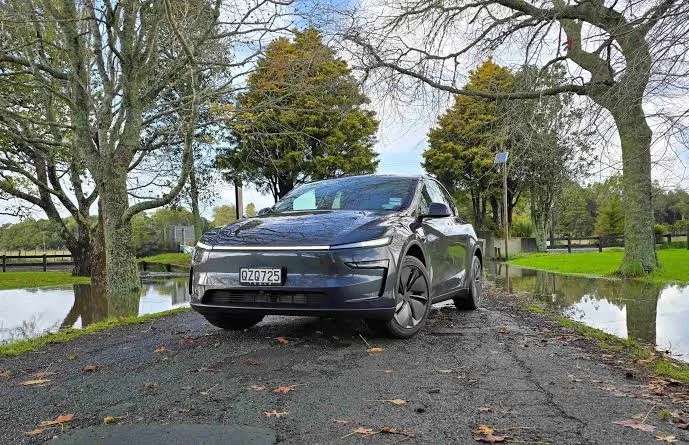
Wellington electrical engineer Peter Goodricke bought both cars through Turners’ damaged vehicle auctions in August and September 2024. Each had been written off by its former owner’s insurer and deregistered. He had them repaired, and both passed the inspection required for reregistration.
Tesla, however, monitors the NZTA register. Under the Unsupported Vehicle Policy on its website, it flagged each car once the register listed it as structurally damaged. It then sent over-the-air updates disabling DC fast charging on 26 August and 3 September 2024.
The cars had charged normally while Goodricke used only the key. The updates took effect when he connected them through the Tesla app, on 30 October 2024 and 29 January 2025. From then on, they could only charge from a regular power point, which he said can take days.
Tesla’s safety argument
Tesla offered to inspect each car for $1,624.43 and would restore fast charging only if satisfied it was safe. It argued that damaged high-voltage batteries can, in rare cases, cause serious fires, and that internal cell damage is hard to detect.
Goodricke claimed breaches of the Fair Trading Act and the Consumer Guarantees Act. He did not pursue Turners, saying it had done nothing wrong. The tribunal dismissed his claim in September 2025. The referee found the policy was not misleading or unconscionable, and that knowingly buying a car listed as damaged carries some risk. A rehearing application failed in November 2025.
Why the review failed
A District Court appeal is only possible if the tribunal hearing was run unfairly. Goodricke told the court he could not show that, so he sought judicial review instead, representing himself.
Justice Boldt found the grounds were really a challenge to the merits. The tribunal decides cases on substantial merits and justice rather than strict legal rights, he noted, and the referee had asked the right question. He was also satisfied the Consumer Guarantees Act had been applied correctly.
A pointed note on remote control
Then came the interesting part. The judge described Tesla’s ability to alter cars long after sale as “remarkable”, saying it should be used only in tightly constrained circumstances. A car belongs to its owner, he said, and only a clear legal basis can override that.
Tesla’s counsel accepted the company has no unilateral right to alter someone else’s car. Counsel also accepted that a website policy is not enough on its own without a contract. Both sides agreed the app requires acceptance of Tesla’s terms, although no evidence on that point was before the court.
Goodricke was ordered to pay Tesla $26,827 in costs plus $257.40 in disbursements. The judge declined Tesla’s request for increased costs because Goodricke was a litigant in person.
What it means for buyers
The practical lesson for anyone eyeing a cheap damaged EV at auction is simple. Passing inspection and getting back on the register does not guarantee full functionality. Still, this is no blank cheque for carmakers. Tesla won under the tribunal’s broad fairness test, and the judge made clear that remote power over owners’ cars needs a proper legal footing. Those app terms most of us tap straight past may carry more weight than we assume.