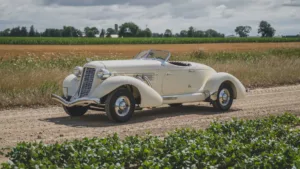
RM Sotheby’s will offer a 1935 Auburn 851 Supercharged Speedster at its Hershey Auction, describing it as the first example of the Art Deco icon to be built.
Plenty of classic cars arrive at auction with big claims attached. This one arrives as reportedly the first of its kind. RM Sotheby’s will offer a 1935 Auburn 851 Supercharged Speedster, serial number 851 32050 E, at its Hershey Auction. The auction house describes it as the first example of the model ever produced.
That alone would get collectors talking. However, the car’s past adds a good deal more, including a crash, a trade for custom work and several decades of careful restoration.
A Depression-Era Gamble
The 851 Speedster was something of a last throw of the dice for Auburn. The company was struggling badly during the Great Depression and needed a halo car to bring buyers into its showrooms. The Speedster certainly got noticed, although that attention did not save the company.
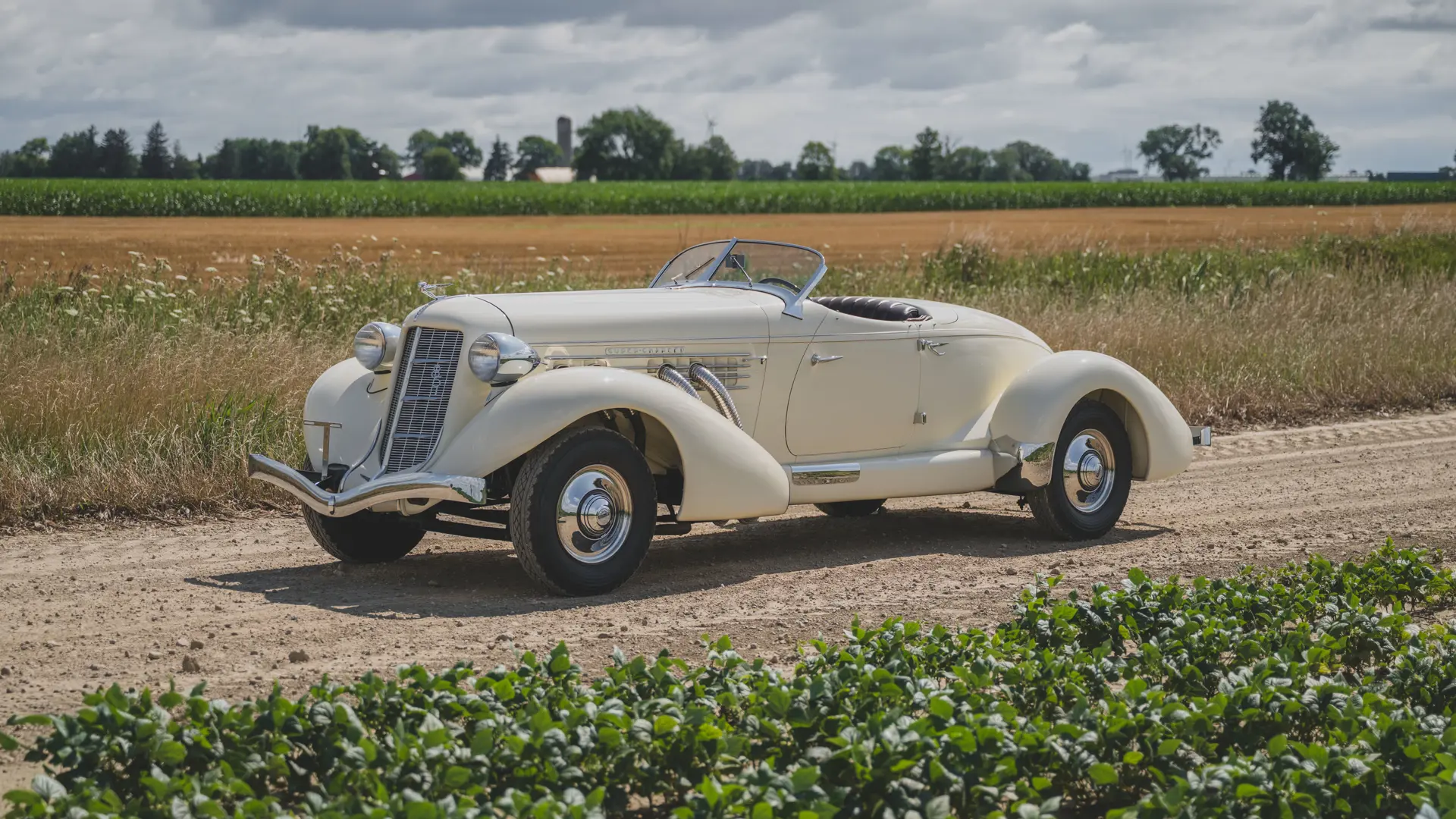
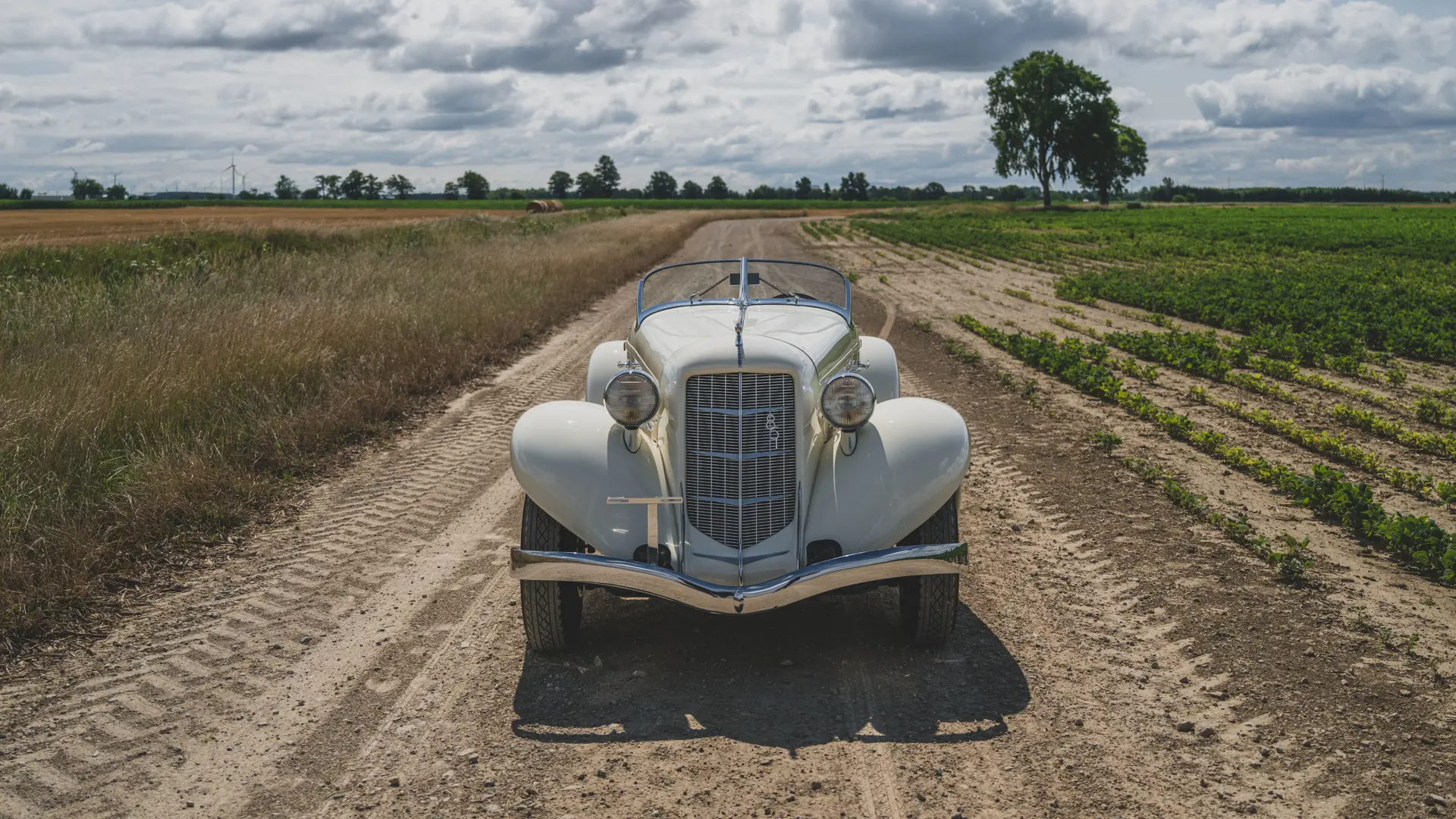
Gordon Buehrig penned the body, and it remains one of the high points of Art Deco design. A long, straight bonnet runs back to a sharply vee’d windscreen. Behind it, pontoon wings and a tapering boattail rear finish the shape, with chrome exhaust pipes emerging from the side of the bonnet.
There was substance under the styling, too. A Schwitzer-Cummins supercharger lifted output to 150 horsepower. Meanwhile, a Columbia dual-ratio rear axle gave drivers low and high ratios, chosen with a switch on the steering wheel.
Each car also wore a dashboard plaque signed by racer Ab Jenkins, claiming it had been driven at 100.1mph before delivery. That was marketing stretching the truth a little. Still, it had some basis: Jenkins did go past 100mph at Bonneville in a stock Speedster.
What Makes This Car Different
Auburn built the earliest 851s using leftover 1932 to 1933 Speedster bodies that it had kept in storage. It then updated them to Buehrig’s new design. These cars carry a U47 body number prefix, and this example is U47-200.
It also wears supercharger number 1001, frame number 1050 and engine number GH 3341. That engine is reportedly a very early production block. According to marque historian John Ehresman, only the first 16 cars had more enclosed front wings. Only the first four had exhaust pipes coming through the bonnet louvres, and this car has both features.
From $200 Wreck to Concours Winner
After an accident, Martin Papazian bought the car in the early 1950s for $200. In 1956, he passed it to Paul Walker in exchange for work on his Cordster custom. Walker kept it for 30 years, fitted a new frame during an amateur restoration and lent it to the Sturbridge Auto Museum.
Ehresman bought the car in 1986. That year, the ACD Club certified it, noting features suggesting it was the first 1935 851 Speedster built. A later owner, Bob Levine, commissioned a full restoration from RM Auto Restoration. It was finished in 1994 in ivory with correct leather trim.
Awards followed quickly, including Best Auburn at the 1994 ACD Club National Reunion and a CCCA Primary First Prize in 1995. Its current owner bought it in 2025 and sent it back to RM Auto Restoration for freshening. Invoices show more than $15,000 spent on the steering, brakes, fuel system and suspension.
Why It Matters
RM Sotheby’s has not published an estimate in the material provided. What it has supplied is a clear paper trail, and in the classic market that often counts for as much as condition. For ACD collectors, a documented first car is the kind of starting point a whole production run is measured against.