For years, Tesla has painted us a picture of tomorrow: no steering wheels, no pedals, no drivers, just pure automotive zen while your car handles the boring bits. It’s been a compelling narrative, one that’s helped cement Elon Musk’s company as the darling of the autonomous driving revolution. But here’s the thing about narratives, they only work until someone else starts actually living the story.
Enter Waymo. While Tesla’s been perfecting its elevator pitch about generalised unsupervised autonomy, Waymo has been quietly doing something far more impressive: putting actual driverless cars on actual roads where actual paying customers can ride in them. And as investor Gary Black recently pointed out, that’s a rather inconvenient problem for Tesla to explain away.
The Numbers Tell a Story Tesla Won’t Like
Let’s break down the cold, hard reality. Tesla delivered a respectable 486,532 vehicles in Q3 2026—solid numbers, genuinely impressive figures. But here’s what investors are increasingly asking: where are all the driverless Teslas?
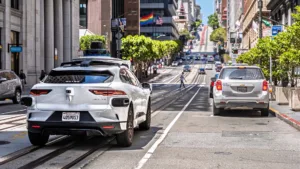
The answer is humbling. Tesla currently has unsupervised autonomous operation approved in six US metropolitan areas, with expansion efforts underway. Waymo, meanwhile, has been authorised for public fully driverless rides in 15 US metro areas—not as concept demonstrations or controlled tests, but as actual commercial services where humans can step into a car and go for a ride without a driver’s seat occupied. That’s a chasm.
And the scale problem? It gets worse. Waymo operates more than 4,000 driverless vehicles across the US.Tesla had approximately 589 vehicles registered in Texas as fully autonomous as of October 2, 2026, including 420 Model Ys and 169 Cybercabs. The gap isn’t just significant—it’s staggering.
Full Self-Driving Doesn’t Actually Mean Fully Self-Driving
Here’s where things get properly confusing, and where the automotive industry has probably done itself no favours. Tesla’s “Full Self-Driving” sounds revolutionary. The name promises everything. In practice, the version available to customers remains a supervised driver-assistance system in many markets, meaning you still need to keep your hands ready and your attention focused. It’s aspirational naming at its finest.
Waymo’s approach is refreshingly honest by comparison. Their vehicles are designed to operate without a human driver supervising anything.No hands on the wheel. No human backup. Just autonomous operation in the real world, with real passengers, in real traffic conditions.
Why Scale Matters More Than You’d Think
Autonomy isn’t won in laboratories or conference rooms. It’s won through millions of miles of real-world data collection, where autonomous systems encounter the gloriously chaotic mess that humans create every time they leave home: pedestrians, cyclists, roadworks, emergency vehicles, children chasing footballs, and that one person who stops in the middle of the road because they’ve just remembered they forgot to buy milk. The more driverless vehicles operating in the real world, the more situations they encounter. The more situations they encounter, the more data gets collected. The more data gets collected, the more opportunities to improve the system. It’s a virtuous cycle—one that Waymo is actively spinning while Tesla remains caught in the “coming soon” holding pattern.
Tesla’s Gamble: The Bigger Bet That Might Actually Pay Off
Before you write Tesla’s autonomous driving obituary, pump the brakes. Tesla’s real advantage isn’t just its existing fleet, it’s the sheer scale potential. The company isn’t trying to build a carefully mapped robotaxi service for a handful of cities. It’s pursuing something far more ambitious: a generalised autonomous driving system capable of operating across vastly different roads and situations through software updates rolled out to millions of vehicles. If Tesla cracks this problem, the commercial implications are enormous. Imagine your Model Y gradually gaining increasingly sophisticated autonomous capabilities through regular software updates, eventually evolving into a revenue-generating machine while you sleep. That’s a completely different business model from Waymo’s controlled, geographic-specific expansion.
The catch? The technology has to actually work first. And that’s where Tesla’s challenge lies—converting technological ambition into real-world deployment.
Waymo’s Boring Brilliance
Waymo’s strategy reads like a masterclass in unsexy execution: pick specific geographic areas, map them thoroughly, deploy vehicles carefully, gather data, expand methodically, and repeat. It’s not glamorous. There’s no “your car will be a money-making machine” messaging. There are no breathless announcements about conquering the world. But it works.
And increasingly, that matters more than the hype. The autonomous driving race might ultimately be won not by whoever makes the biggest prediction, but by whoever can reliably, affordably, and scalably make the technology work for real customers in real conditions.
The Nvidia Plot Twist
Just when you thought the Tesla vs Waymo story was straightforward, along comes Nvidia to make it complicated. The chip giant has become increasingly central to the autonomous-driving ecosystem, with its computing platforms powering increasingly sophisticated AI systems.
At CES earlier this year, Nvidia introduced its Alpamayo autonomous-driving platform and announced partnerships across the automotive and robotaxi sectors. Autonomous driving is evolving from traditional automotive electronics into something far more dependent on AI, computing power, and software. Tesla has historically favoured a tightly integrated, proprietary approach. The broader industry appears to be moving toward something closer to an ecosystem—Nvidia supplying the computing muscle while various players develop their own software. It’s starting to look suspiciously like the smartphone industry, where vertical integration eventually gave way to platform-based competition. And we already know how that movie ended.
The Real Winner Might Surprise You
Tesla hasn’t lost, but it’s potentially losing something more valuable: the perception that it’s automatically ahead. Waymo is now actively challenging Tesla’s narrative dominance by simply doing what Tesla has promised.
Oddly, this might not even be a two-horse race. Companies like Zoox, Baidu, and a growing number of automotive and technology players are also pursuing autonomous driving seriously. The winner might not be determined by who has the best driver-assistance system today, but by who figures out how to combine safety, computing power, artificial intelligence, regulation, mapping, fleet management, and sheer scale into a commercially viable service. That’s a much harder problem than it sounds. And it could take years to solve.
The Uncomfortable Truth for Tesla
Tesla has spent considerable time telling us that autonomous driving is the next big thing. Waymo is increasingly demonstrating that it can actually be a thing, right now, in multiple cities across America.
When the future finally arrives, the company that gets there first doesn’t necessarily win a trophy. But it absolutely gets to charge the passengers first. For Tesla, that’s the uncomfortable reality: the future they predicted is arriving—just not in the way they promised, and not necessarily through their technology.