There is a Swedish word, vemod, that English never quite manages to carry across. It is not grief and it is not nostalgia. It is the quiet ache of something good ending while you are still standing inside it. I have been carrying a fair bit of vemod this week, and the cause is an auction listing.
The Swedish auction house Klaravik is selling off the last Saab cars left on the factory site in Trollhättan. Seven vehicles, no reserve, opening bids of nought kronor, with the gavel falling at an event on the old factory grounds on Saturday 30 May. The page calls it en historisk händelse som markerar slutet på en era, a historic moment marking the end of an era, and for once the marketing line is simply true.
I should declare an interest. In 1994 I was fifteen, not long off the boat (literally) from Finland, sitting through årskurs nio (ninth grade) at Pettersbergsskolan. Trollhättan was my first “overseas posting” and a place that immediately felt like a second home town to me. It is a genuinely beautiful spot, the Göta älv carving through the middle of it, the old locks and the falls, the kind of small Swedish city that runs on water and engineering in roughly equal measure. And back then it ran on one thing above all else. Saab.
Half the kids I knew had a parent on the line, in the design halls or somewhere in the supply chain that fed the place. Saab was not just an employer in Trollhättan; it was the weather. It set the rhythm of the town. You did not have to love cars to feel it, and I happened to love cars. So the idea that the very last ones are now being clicked away to the highest online bidder, utan reservationspris, sits oddly in the chest.
What is actually going up for grabs
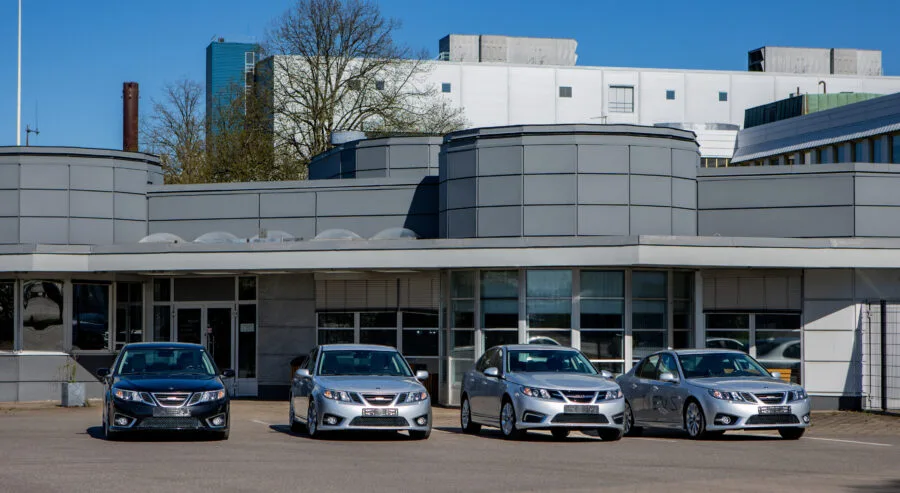
The cars come from Nevs, the outfit that took the wheel after Saab’s collapse, and the lots are far more interesting than “a few leftover saloons” would suggest.
Three of the seven are genuine Saabs, 2014 model-year förseriebilar, which is to say pre-series cars built ahead of a production run that, in the end, the company never got to enjoy. Two of those are 9-3 Aero pre-series cars, the warm versions, and they have led the bidding from the off, each comfortably past 100,000 kronor. The third Saab, a plainer 9-3 pre-series car, sits lower, somewhere around the 50,000 mark.
A quick note for the Kiwi reader, because it always trips people up. The odometer figures are quoted in mil, and a Swedish mil is ten kilometres, not the imperial mile. So the front-running Aero showing “1843 mil” has actually covered about 18,430 km. Barely run in.
Then it gets properly strange, in the best way. The remaining four are Nevs prototypes and oddities, the sort of thing that normally never escapes an engineering compound:
- A Nevs 9-3 electric car, the 2014-era EV programme that was supposed to point the way forward.
- A four-wheel-drive prototype with a motor at each corner.
- A self-driving development car.
- A range-extender prototype, the cheapest of the lot, trailing the field at a few thousand kronor.
All seven are sold oregistrerade, unregistered, which is exactly what you would expect of cars that were never meant to leave the building. These are not used cars. They are artefacts.
The no-reserve gamble has paid off. With a week still to run, the seven lots had drawn more than 340 bids between them and crept past 430,000 kronor all told. The 3,878 mil Aero alone had pulled 97 bids, a proper scrap. The krona is hardly the world’s reserve currency, but the appetite is unmistakable: these are cars that were never officially sold to anyone, opened at nought, and bidders are now fighting over them. The two Aeros lead the field, while the lonely range-extender prototype trails on a few thousand.
From a 1947 aircraft maker to a 2026 fire sale
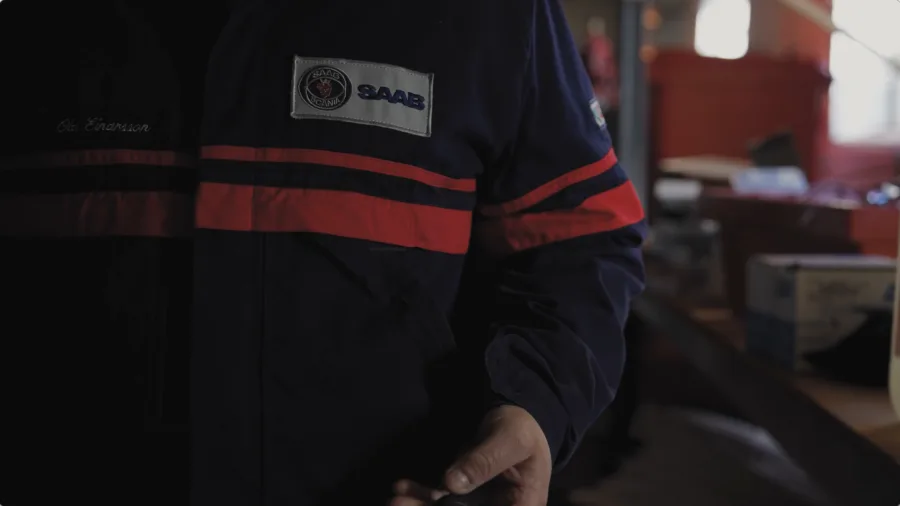
The roots run deep enough to make the ending sting. Saab built aeroplanes first, and on 10 June 1947 the aircraft maker unveiled its first car, the Saab 92, which went into serial production a couple of years later. From there Trollhättan spent the better part of eight decades turning out cars defined by an obstinate, brilliant kind of Swedish engineering: the turbocharging that became the brand’s signature, the wraparound aircraft-inspired cockpits, the ignition key famously down by the gearstick.
The company outlived a bankruptcy and got a fresh shot of life when Nevs took over in 2012. That it has now come to a no-reserve online auction, with the last cars leaving the fabriksområde one truck at a time, tells you how the long fight finally went. Drygt 75 år, the listing says. Just over seventy-five years, and now this.
This time, it’s personal
Here is the thing about a town like Trollhättan. When the big employer is also the local identity, the cars stop being products. The fella two doors down helped build the gearbox. Someone’s mum signed off the paint. The badge on the bonnet is, in a quiet way, the family name. Vi som älskar Saab, the old fan refrain went. We who love Saab. In Trollhättan that “we” was most of the postcode.
I was only passing through, a Finnish teenager who stayed long enough to learn the language, well, ish, and let the place get under my skin. One memory has helpfully dated itself. In May 1995 I crammed into a neighbour’s front room for the ice hockey world championship final, the only Finn in a house full of Swedes. Finland had never won gold. That night, in Stockholm, on Swedish ice, we beat Sweden 4-1 for the first title in our history. The song of that spring was Den glider in, a bouncing little anthem originally written for the Swedish team, which us Finns promptly adopted as our own once theirs had lost. I have rarely felt so quietly, gleefully outnumbered, or so completely at home.
But Trollhättan got into me, and Saab was inseparable from it. Watching the last of the cars go under a digital hammer feels less like a motoring story and more like reading that an old school has finally been pulled down. You always knew it would happen. You are never quite ready when it does.
If you are within reach of Trollhättan on 30 May, the event is on the old grounds at the Saab Design Center, and the bidding closes through the afternoon, lot by lot, like a slow goodbye. Everything happens online at klaravik.se. I will not be there in person, half a world away in Hamilton now, but I will be watching the numbers climb from the wrong side of the planet, with a coffee going cold and a head full of a town that was, for a couple of formative years, entirely about cars.
Tack, Trollhättan. Och tack, Saab. Thanks, and goodbye.