
hevrolet has unleashed the unthinkable in the Corvette ZR1. The King of the Hill returns with the most powerful V8 ever produced in America from an auto manufacturer, mind-bending specs and iconic design to challenge the world’s best supercars in both coupe and convertible variants.
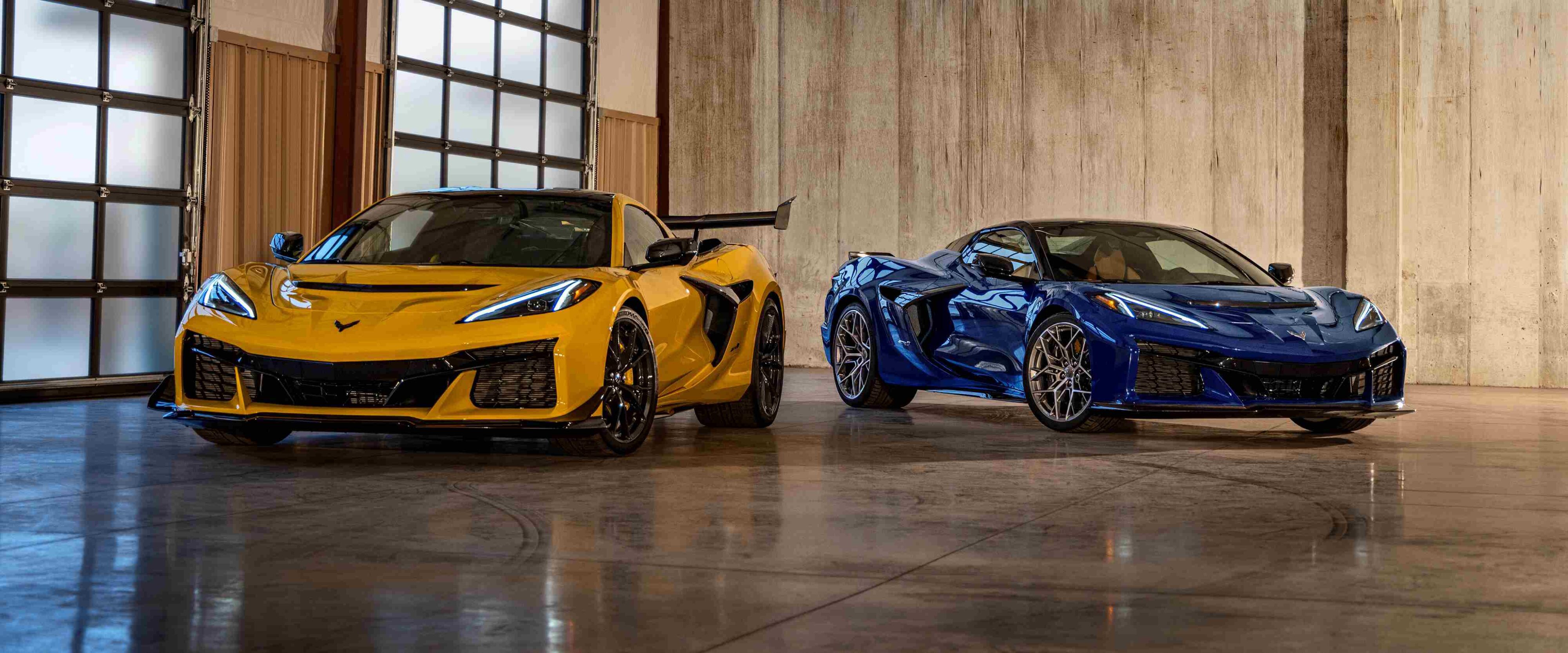
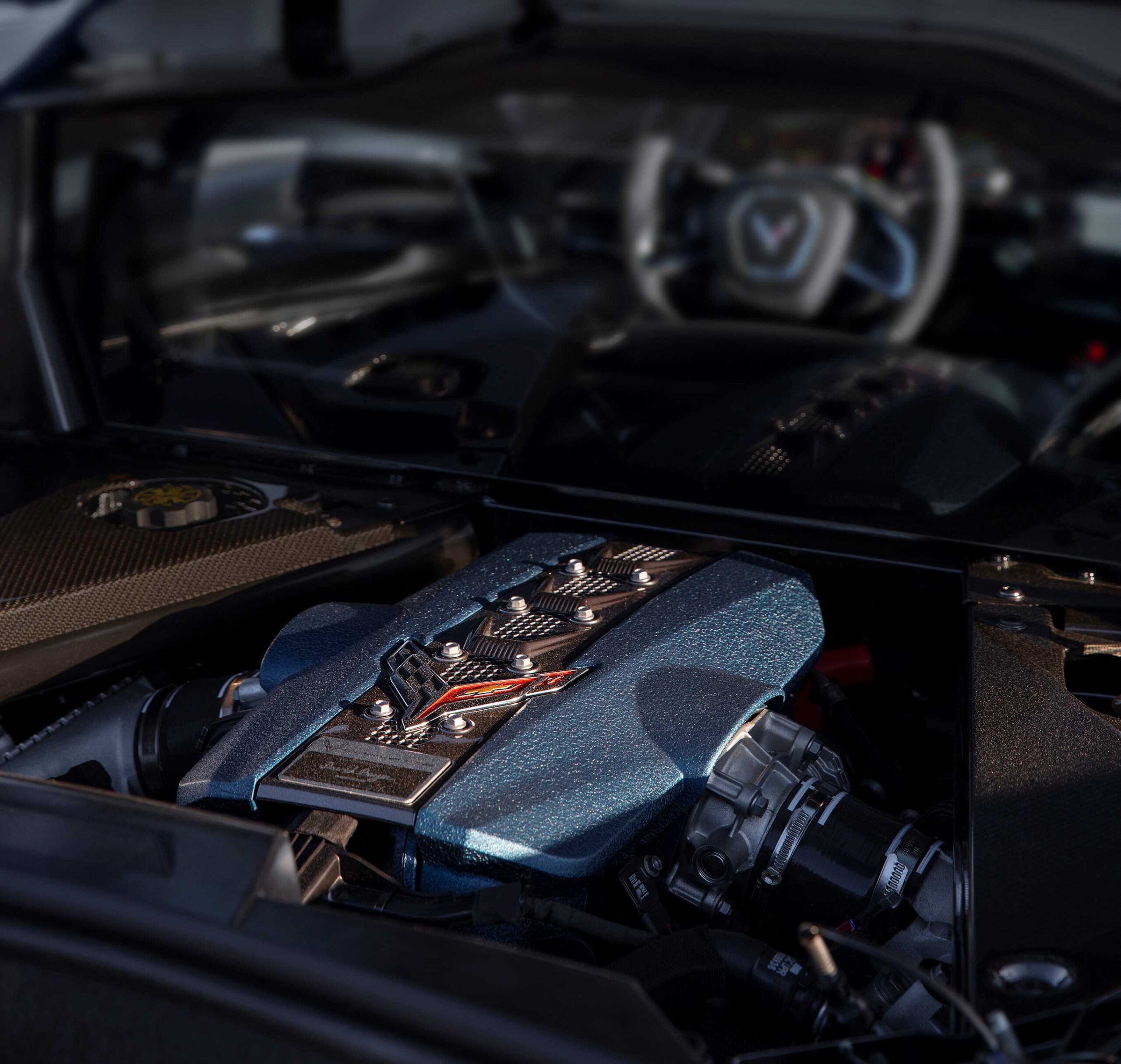
- Corvette ZR1 features a 5.5L, twin-turbocharged DOHC flat-plane crank V8 engine dubbed the LT7.
- The LT7 engine produces 1,064 horsepower at 7,000 rpm and 828 lb-ft of torque at 6,000 rpm, per SAE guidelines — the most power ever from a factory Corvette and the most powerful V8 ever produced in America from an auto manufacturer.
- Corvette ZR1 boasts a GM-estimated top speed of over 215 mph on the racetrack and will dispatch the quarter mile with a GM-estimated sub-10-second time1.
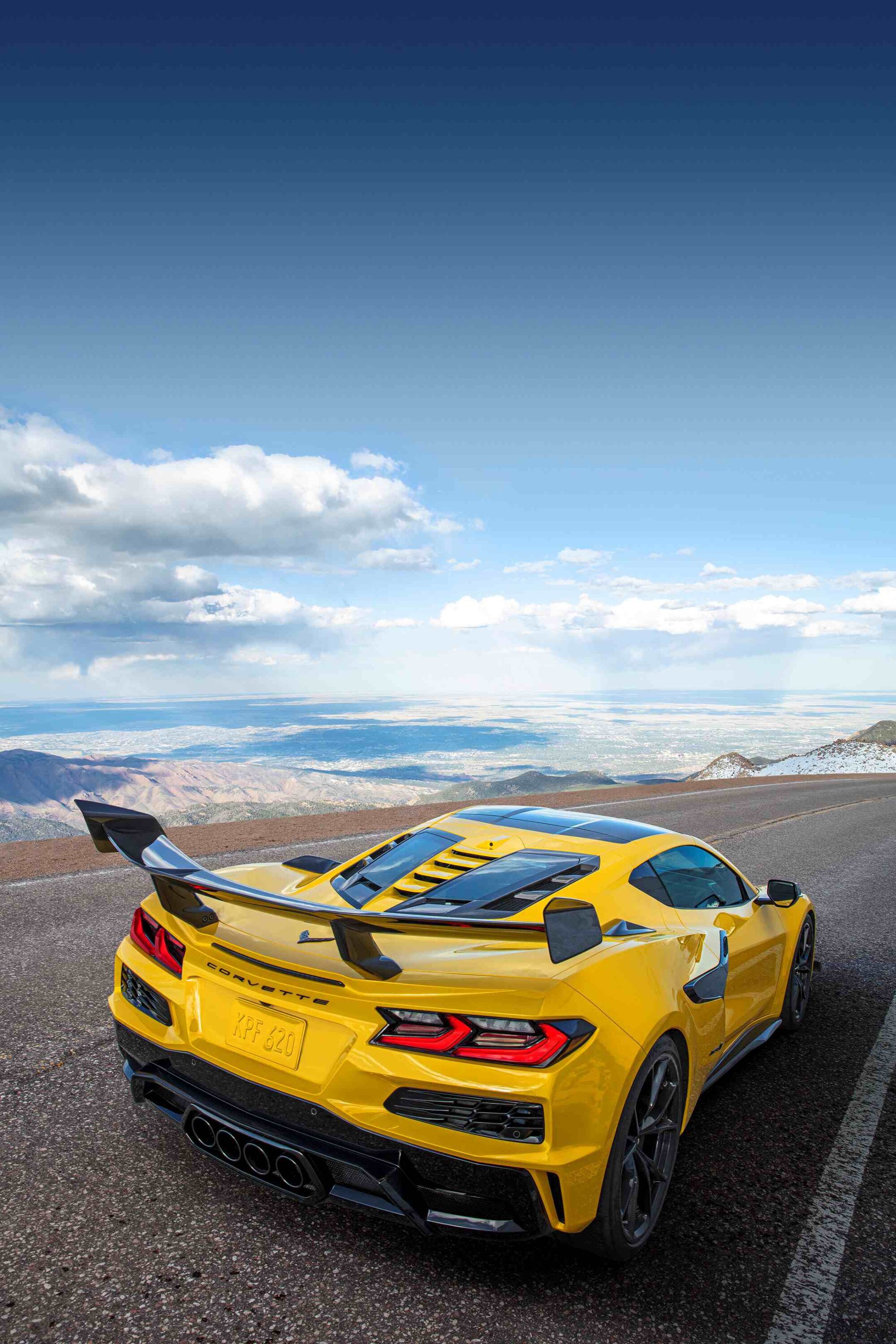
- Purposeful carbon fiber aero package creates over 1,200 pounds of downforce at top speed.
- ZR1 revives one of the most iconic styles in Corvette history: the split rear window.
“The team that revolutionized Corvette with a mid-engine architecture took on another challenge: take ZR1 to the next level,” said Scott Bell, vice president, Chevrolet. “Corvette ZR1 is about pushing the envelope with raw power and cutting-edge innovation. From Stingray, to Z06, E-Ray, and now ZR1, the Corvette family continues to elevate with each new iteration — and challenge the best in the world.”
Pushing the boundaries of the Small Block
ZR1’s 5.5L LT7 twin-turbocharged DOHC V8 engine starts with the same architecture as Z06’s LT6, the most powerful naturally aspirated production V8 engine ever, and takes it to the next level with twin turbochargers — the first time ever for a factory Corvette.
Dubbed the “Small Block Gemini” architecture, the LT6 program was only the beginning as engineers dual-pathed a goal: to create massive power, capability and character from naturally aspirated and turbocharged flat plane crankshaft twin engines. With these goals in mind, engineers did not create an LT6 with turbochargers, but instead changed and optimized virtually every system for a boosted application.
Corvette ZR1’s 5.5L, twin-turbo DOHC flat-plane crank LT7 engine is the result of engineering prowess and pushing the boundaries of what the engine architecture can do. Thoughtful planning produced the best performance from forced induction, married with the 5.5L flat-plane engine architecture.
Purposeful aerodynamics provide the most downforce ever from a Corvette with over 1,200 pounds at top speed.
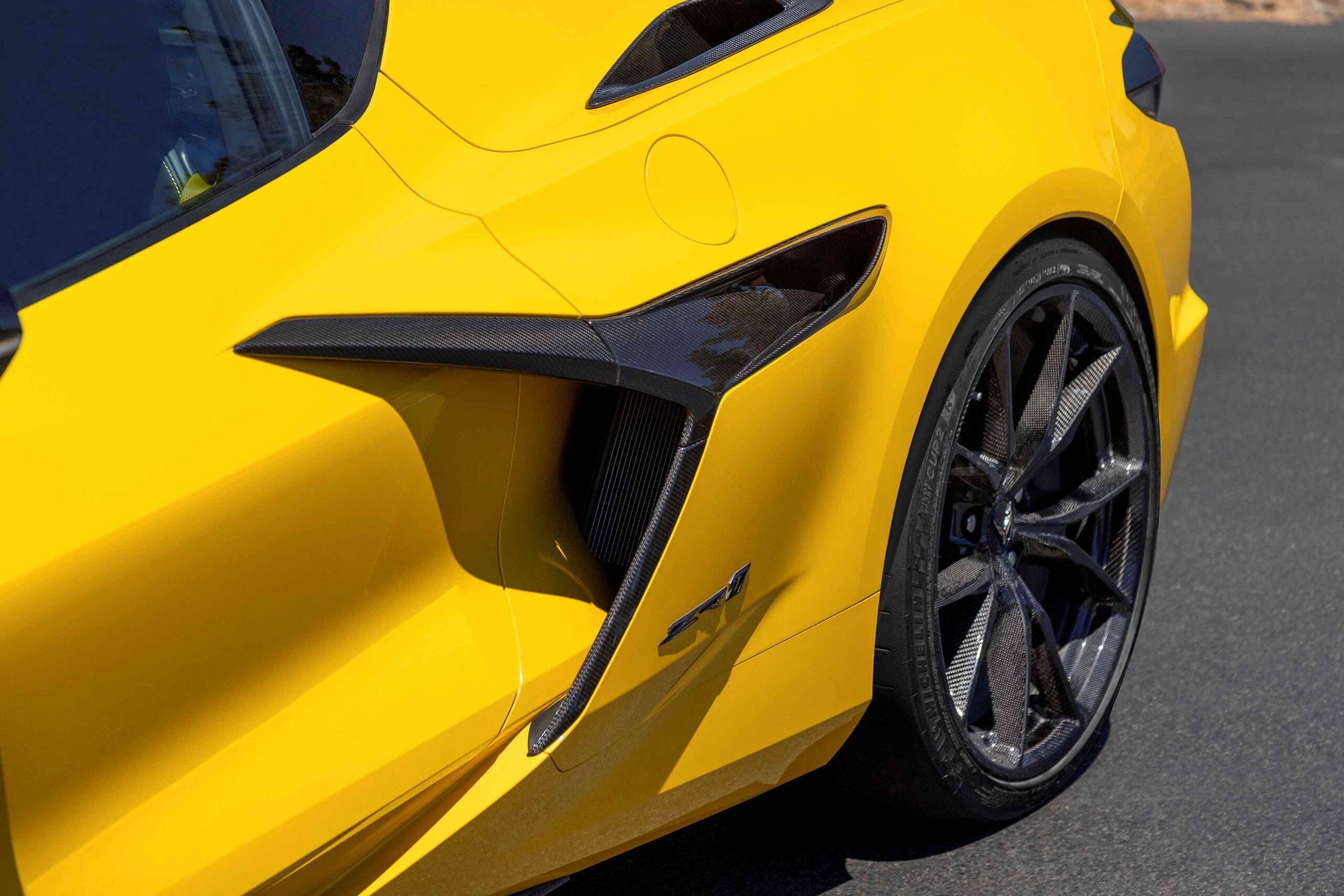
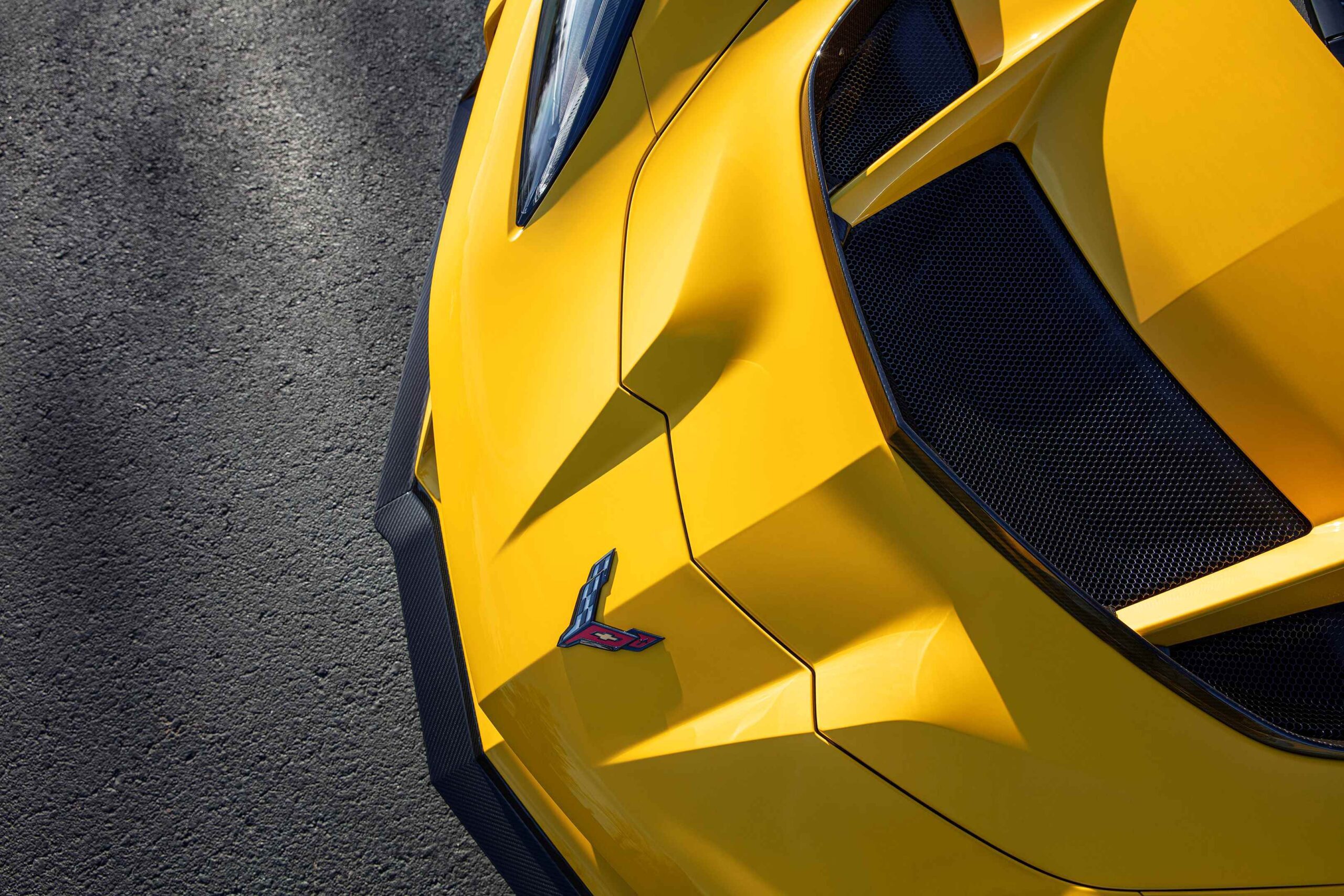
The Corvette ZR1 offers speed on tap like no Corvette before it. Two distinct setups, complete with Magnetic Ride dampers, accomplish this. The standard Corvette ZR1 chassis arrives with a sleeker body with lower drag and a small spoiler with customer-adjustable short and tall wickers. It also includes a standard carbon-fiber front splitter, rocker moldings, side intake with integrated brake cooling, and front underwing with stall gurney deflectors. Michelin Pilot Sport 4S tires wrap 20-inch front, and 21-inch rear wheels. The standard chassis blends the best of on-road comfort and track capability with this setup.
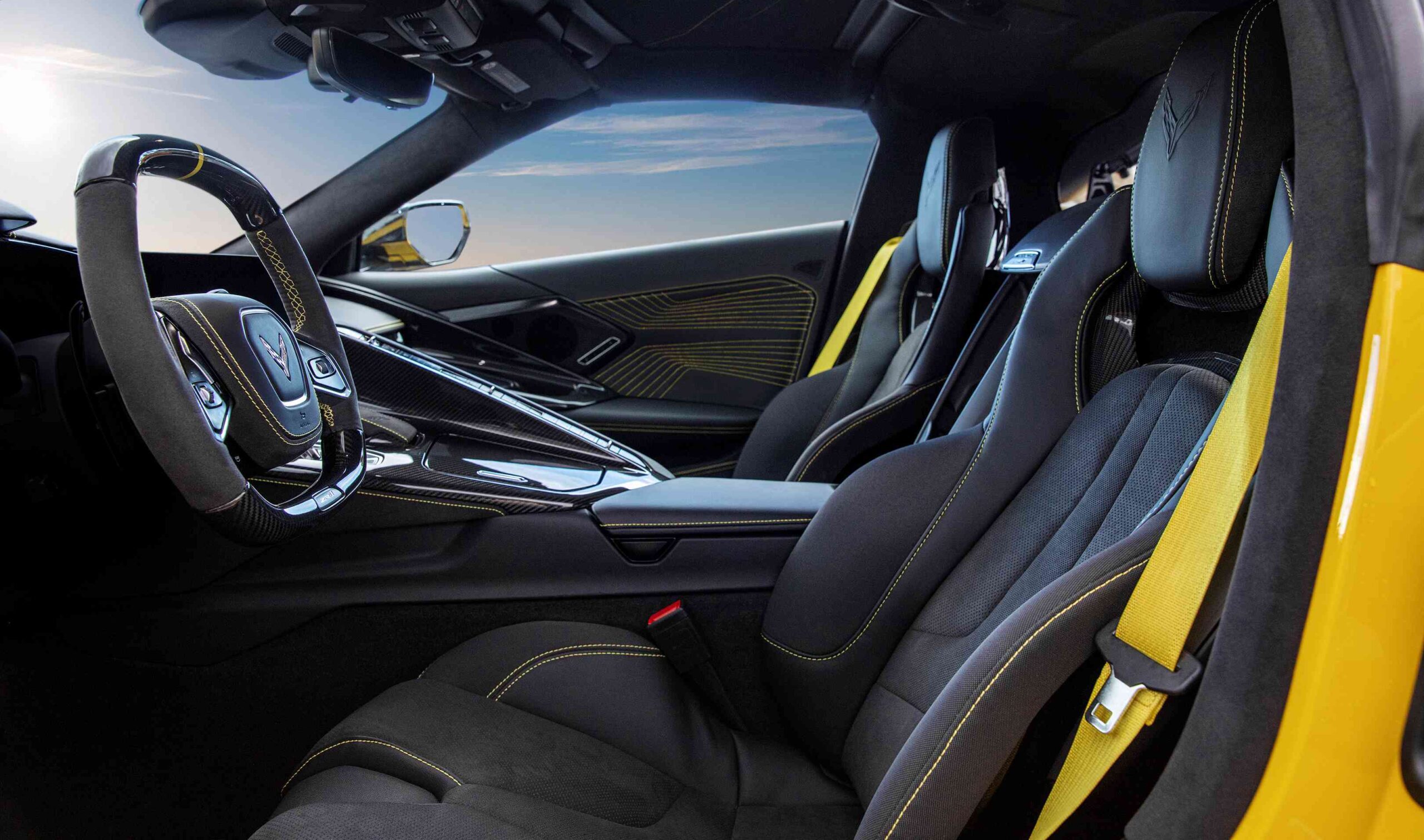
Designed for the split window’s return
For ZR1, function and form quickly took hold to create an instant icon — an icon worthy of the historic split window’s return.
“We didn’t approach this decision lightly, we know this is a beloved element from Corvette’s history,” said Phil Zak, executive design director, Chevrolet. “Not only does this element provide function, but we were able to integrate passionate design into the form and do it in a way that paid homage to Corvette’s history. ZR1 felt like the right time to bring the split-window back.”
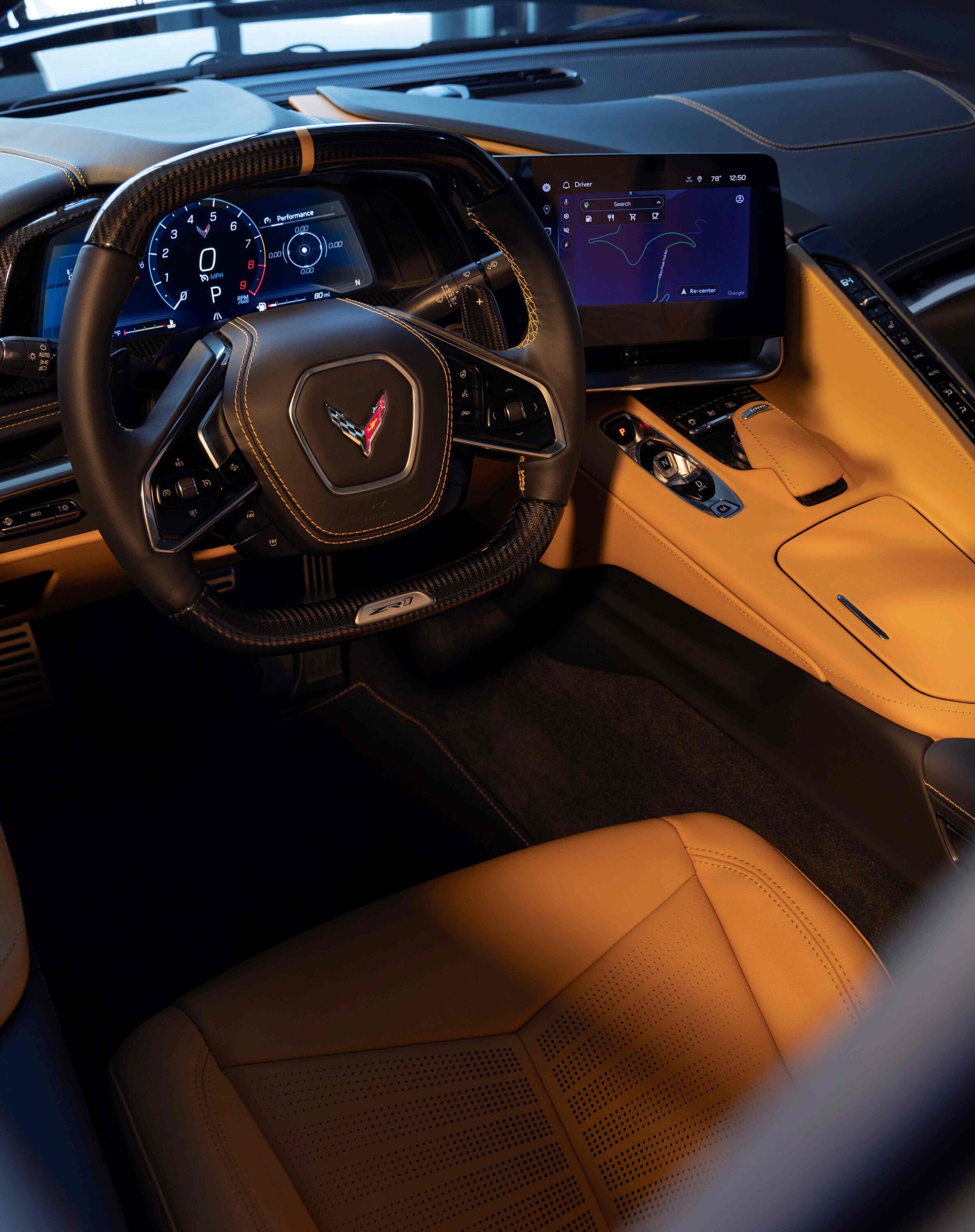
Last seen on the C2-generation Corvette, and quietly previewed on the Corvette Z06 GT3.R race car, the split-window style capitalizes on the design statement that is Corvette ZR1. While serving as a statement piece, this carbon fiber “spine” between the two rear windows, available in exposed weave or body color, provides increased heat extraction from the engine compartment, working in parallel with numerous other cooling elements throughout ZR1.
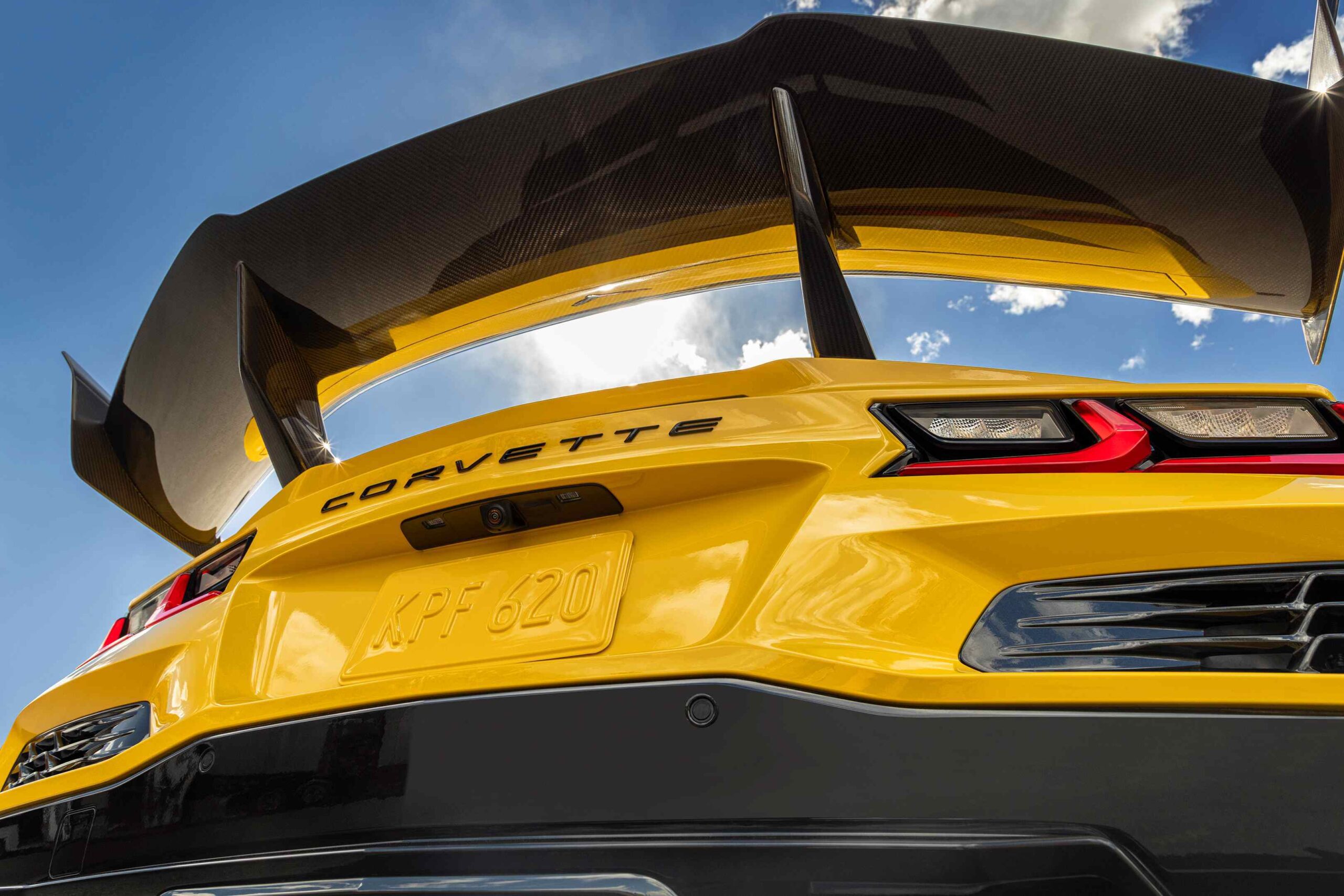
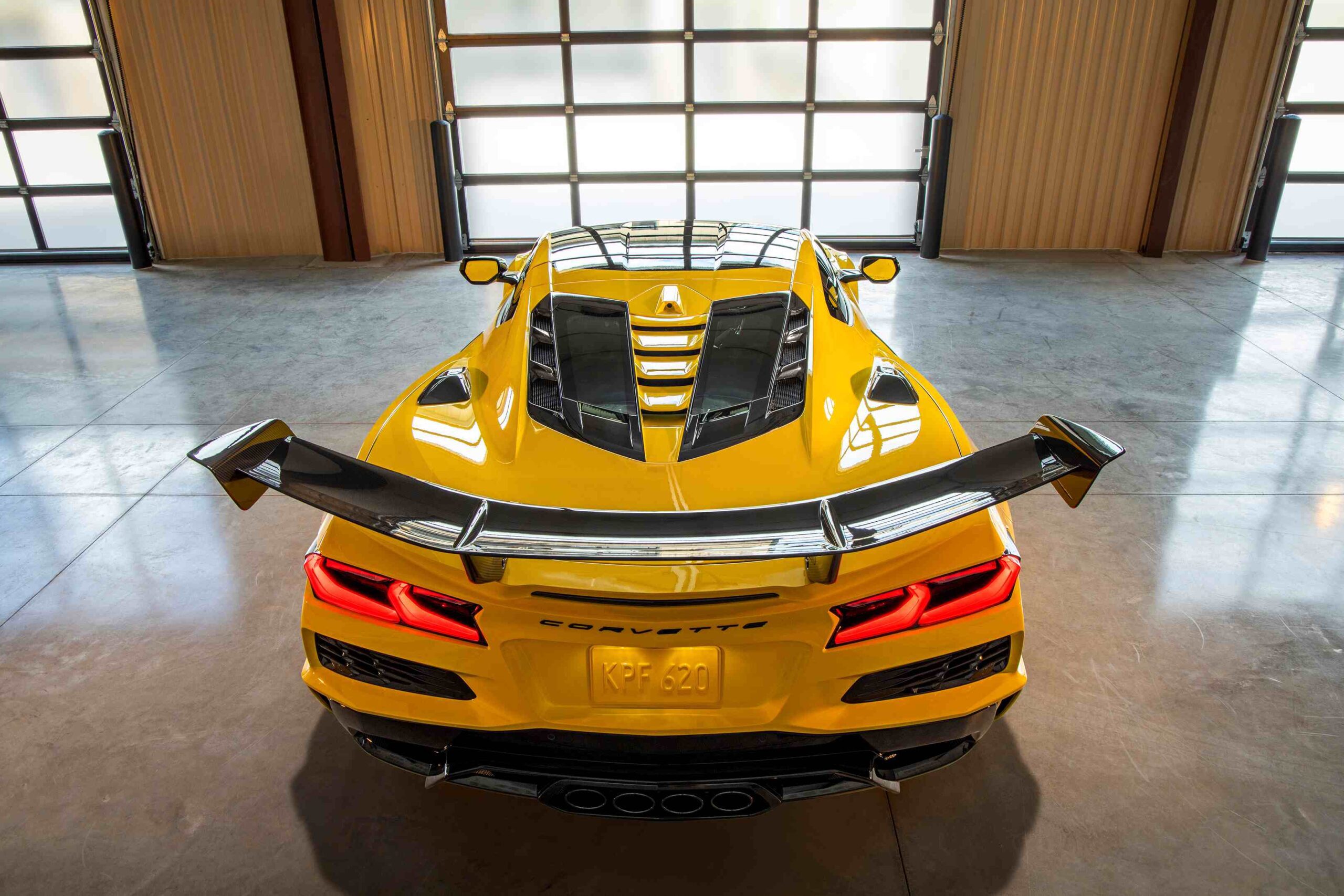
The teams worked to elevate the striking design first revealed with the eighth-generation Corvette Stingray and accentuate lines that evoke the car’s sense of motion — but the design’s function also helps it perform. Teams looked at every component of Corvette ZR1 to ensure cooling and aerodynamics remained top of mind, and any change accomplished the car’s mission: performance.
King of the Hill coming next year
Corvette ZR1 will enter production in 2025 and will be built at General Motors’ Bowling Green Assembly Plant in Kentucky. It joins Corvette Stingray, Corvette Z06 and Corvette E-Ray to continue elevating the Corvette family. Further details on price and availability will be shared closer to production.